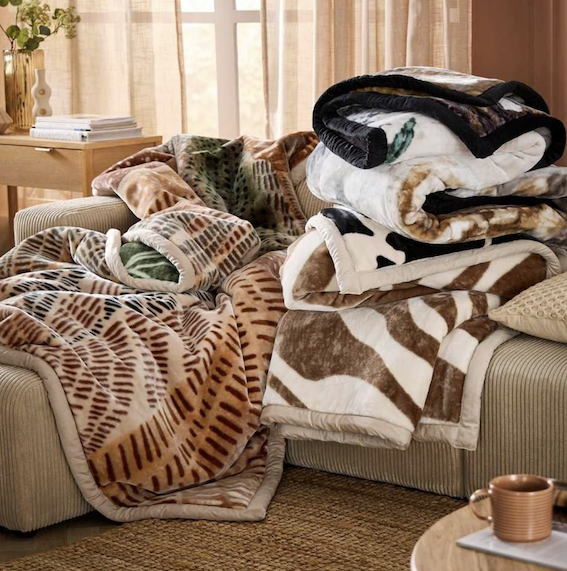
As winter sets in across the country South Africans need to do what they can to keep warm when running a heater becomes more expensive as the cost of electricity increases. It’s time to bring out the winter blankets – whether it’s to sleep tight, or keep cosy on the couch in front of the TV, owning a warm blanket is a must-have. Melissa Esterhuizen, blanket designer for homechoice, spoke to us about the different things that determine the warmth of a blanket.
What is the best material?
Blankets keep you warm by trapping the air around your body and preventing it from escaping. Some materials are better suited at trapping this air because of the pockets created between the fibres.
Synthetic fibreslike polyester fleece or acrylic mink are popular choices for warm blankets. The fibres are soft, lightweight, warm, durable, easy to care for (machine washable), quick-drying and relatively inexpensive. “Synthetic fibres are often treated with hypoallergenic finishes that help to reduce allergic reactions and improve comfort,” Esterhuizen says.
Wool isoften considered the gold standard for warmth and provides excellent insulation, and natural moisture-wicking properties. It’s breathable (prevents overheating), durable, and naturally flame-resistant. For some people it can be itchy and may require special care like handwashing or dry-cleaning, and it’s often a more expensive option.
Down islightweight and insulating, and usually made from duck or goose feathers. It can be expensive, and requires careful cleaning. While very warm, it’s not ideal for people with allergies.
What about the weave and texture?
The texture of a fabric depends on the type of fibres used (wool/cotton/synthetic), the weave, and any finishing treatments. These elements combined are what make a blanket feel silky or coarse, or plush or crisp to the touch. As a rule, a blanket with a tighter weave with less space between the fibres creates a denser fabric that traps more warm air. A looser weave allows more air to pass through, reducing its insulating properties and making it less warm. So look for a tighter, denser weave with a plush texture if you want a warmer blanket.
A sherpa blanket is a type of cozy, plush blanket that features a soft, fleece-like material on one or both sides, resembling the look and feel of sheepskin or wool. Fleece and microfleece are fabrics with a raised, fuzzy surface created by a process called “napping.” This process raises the fibres, creating a soft texture that traps a lot of air. The fabric is designed to be extremely warm and insulating, making it ideal for cold weather.
Faux fur blankets that look and feel like real animal fur are very fashionable and popular, says Esterhuizen. They not only look luxurious, but they’re warm because they’re made from synthetic fibres like polyester or acrylic. The pile length and density create a thick, plush surface that adds insulation, while the textured surface increases contact with the body, all of which work together to prevent heat loss and keep you warm.
But there’s also another type of weave known as Raschel – named after the Raschel machine on which it is knitted.
“Raschel blankets are considered widely to be of the highest quality – they are thick and dense, with no hair loss. Their appearance is as bright and glossy as mink fur, and their hand feel is as comfortable and soft as cashmere. They offer unrivaled thermal performance while maintaining good breathability,” says Esterhuizen.
What is ‘ply’ and why does it matter?
“When you’re looking for a heavy blanket to keep you cosy, you’ll often hear people speak of ‘ply’. This refers to the number of layers sewn together in a blanket, says Esterhuizen. “Generally, higher ply numbers indicate a heavier, more durable, and warmer blanket.”
In summer, single-layer blankets provide lightweight, breathable coverage – ideal for air-conditioned rooms or warm climates.
In winter, 2-ply and 3-ply blankets offer exceptional thermal insulation to keep you warm and snug. So, if you’re looking to keep warm, a heavier 3-ply blanket should be your first choice, Esterhuizen advises.
Esterhuizen says everyone’s needs are different, but the most important things to bear in mind when selecting a winter blanket are how much warmth you need, whether you suffer from allergies, the care requirements of a blanket, and affordability. “There’s a winter blanket for everyone, and every pocket,” she concludes.