
Every year, more than 7 300 South Africans are diagnosed with blood cancer. That is more than one person every hour. More than 21 000 are battling it right now, and nearly 5 000 people die from it annually.
World Blood Cancer Day, observed annually on 28 May, is trying to change that.
This year, DKMS Africa‘s head of Community Engagement and Communication, Palesa Mokemele, breaks down what every South African should know:
Myth: Blood cancer is just another form of cancer
It’s not. Most cancers form solid tumours that can be surgically removed. Blood cancer starts in the blood, bone marrow or lymphatic system, corrupting the cells your body needs to fight infection and carry oxygen. With nothing to cut out, treatment typically involves chemotherapy, targeted therapy, immunotherapy or, for many patients, a stem cell transplant from a matched donor, which is often the only real chance of a cure. The three main types – leukaemia, lymphoma and myeloma – each behave differently. All are serious.
Myth: You’d know if something were seriously wrong
Blood cancer has no lump to find. Its warning signs – persistent fatigue, unexplained bruising, recurrent infections, night sweats and swollen lymph nodes – are easily dismissed as stress or being rundown. Patients often describe months of feeling ‘off’ before diagnosis, and that delay can mean the difference between a good outcome and a very poor one. If symptoms persist for weeks, see your doctor. A simple blood test can be enough to identify a problem early, and blood cancer is most treatable when caught early.
Myth: Blood cancer is a disease for older people
Blood cancer is the most common cancer in South African children under 19. More than 700 children are diagnosed each year, and more than 300 die. It accounts for nearly half of all childhood cancer diagnoses in the country. Unlike solid-tumour cancers linked to ageing or lifestyle, blood cancers can arise from genetic mutations at any stage of life. The blood-forming system is highly active in young, growing bodies, making it more vulnerable to the cellular errors that trigger blood cancer.
Myth: Chemotherapy is always enough
For many patients, it isn’t. A stem cell transplant from a matched, unrelated donor is often the only viable path to survival, replacing the patient’s diseased blood-forming system with a healthy one. Transplant success rates range between 72% and 92%, but only if a suitable donor can be found.
Myth: There’s nothing I can do about it
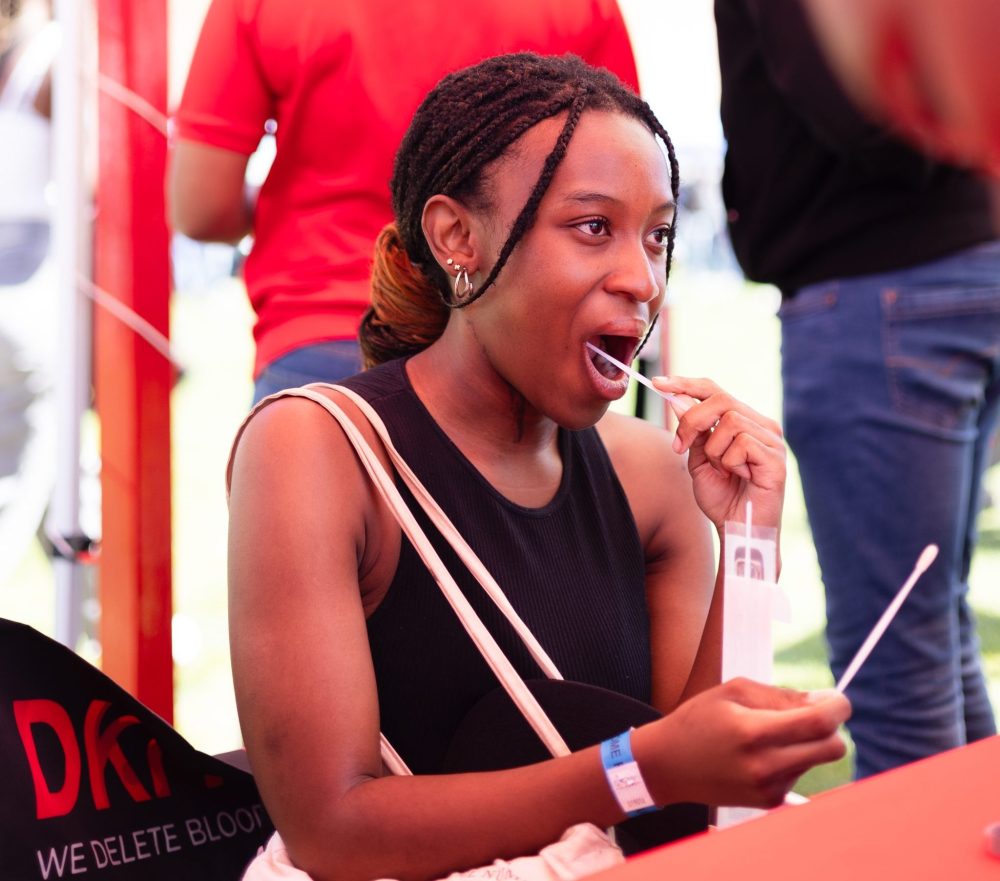
There is, and it takes five minutes. Request a free swab kit – it arrives at your door. Swab the inside of your cheek, send it back and your profile is added to the registry. No needles, no hospital visits, no cost. If you’re ever identified as a match, DKMS Africa will contact you, and that moment matters just as much as signing up.
Myth: Every patient has an equal chance of finding a match
They don’t, and this may be the most important fact on this list. Finding a donor depends on human leukocyte antigen (HLA) characteristics, which are inherited and vary significantly across ethnic groups. A patient’s best chance lies within a registry that reflects their own background. Patients from white South African communities currently have a relatively higher chance of finding a match, as that demographic is better represented in local and international registries. For patients from black, coloured and Indian communities, the odds are considerably lower. DKMS Africa has more than 173 000 registered donors and is working to grow representation across all communities, but every new donor, especially from underrepresented backgrounds, directly improves the odds for a patient who may otherwise run out of options.
Myth: Donating stem cells is a major operation
For most donors, it’s closer to giving blood. In around 90% of cases, stem cells are collected from the bloodstream through a standard drip – no surgery, no hospital stay. Donors take medication for a few days beforehand to boost stem cell production and are typically back to normal within a day or two. In the remaining cases, stem cells are collected from the bone marrow under general anaesthetic; donors usually recover fully within a week or two. Either way, the body replenishes its stem cells naturally within weeks. The discomfort is temporary. The impact on the patient can be the rest of their life.
“On World Blood Cancer Day, we ask every South African to do one thing: share this,” says Mokomele. “The more people who understand blood cancer, the more lives we can save.”


