

A sudden medical emergency nearly cost Consult by Momentum financial adviser Andrew Wolmarans his life – but thanks to prudent financial planning, hospital bills were the least of his worries.
I used to think I had time and health on my side. I trained hard, stayed active, kept an eye on my numbers. By most measures, I was doing what you’re supposed to do.
Then one evening in November 2022, after what had been a completely ordinary day, my body gave way without warning. I was suddenly violently ill and my brother had to rush me to the emergency room.
Within days, my organs were failing.
What followed were the scariest moments of our lives. Doctors weren’t entirely sure what they were dealing with at first. By the time they understood it was a rare form of pancreatitis caused by gallstones blocking the biliary system, my condition had escalated to septic shock. I was put into a medically induced coma, and my family were told I had a 50/50 chance of making it – which later dropped to 5% when my organs went into failure.
My sister, nieces and nephew flew to Joburg from all over the world, preparing for the worst.
My wife had to consent to a dangerous but ultimately life-saving surgery on my behalf, with the surgeon removing my rotten gallbladder through my bellybutton. This keyhole surgery is a highly unusual form of surgery in my case – doctors usually opt for open surgery – and it was supposed to take two and a half hours, which turned into six, but it was ultimately what saved my life.
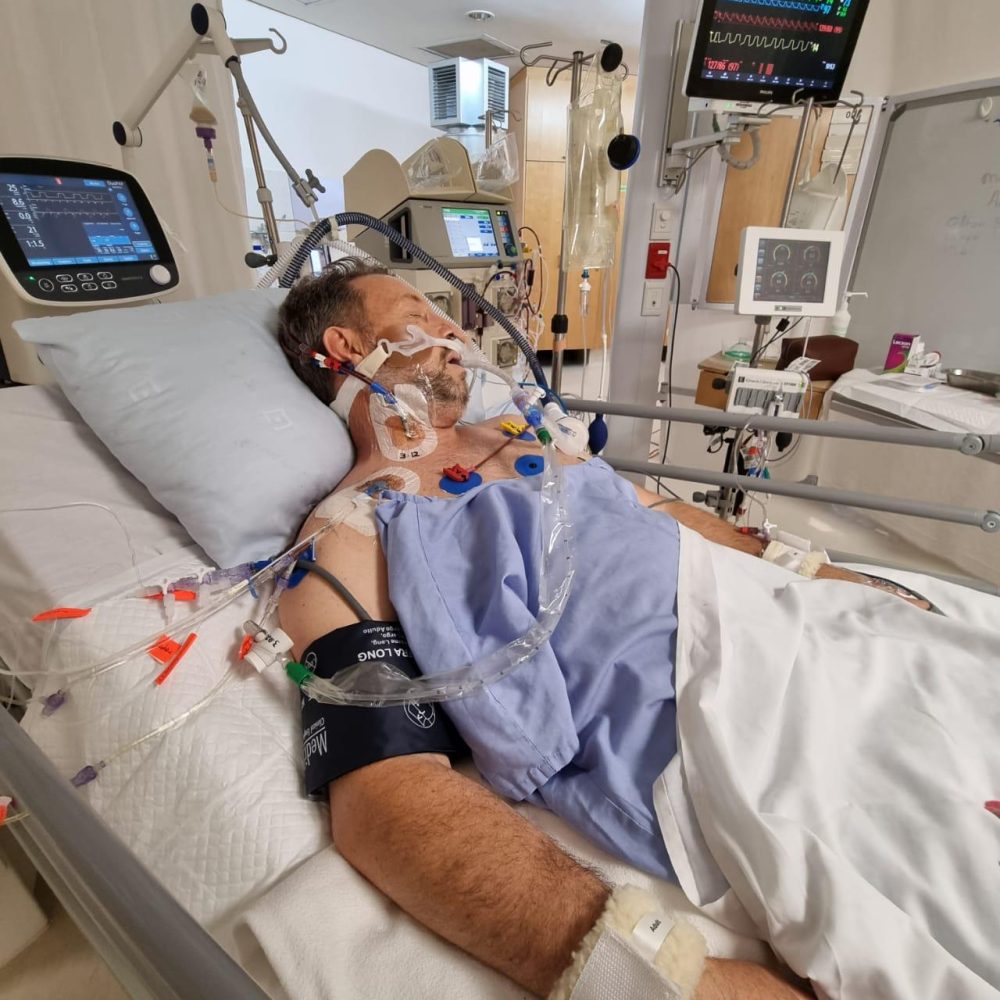
I thought I would be home before Christmas, but I ended up spending 62 days in hospital, including 58 in intensive care.
Once we got through the first shock of my sudden illness, we got the second one: The bill for my hospital care for that initial phase alone was R1.8 million!
But here’s where fortune was finally shining on us – because just six weeks before my surprise hospital admission, I had updated my financial plan, which meant at least we didn’t have to worry about money while I recovered.
The quick decision that made all the difference
Six weeks before I landed in hospital, I had a gap in my diary after a couple of last-minute cancellations. I decided to use the time to review my own cover, which I hadn’t looked at properly in a while. So, I updated it the way I would for a client: I increased my income protection to match my earnings (which had increased over time), added personal disability benefits, upped my critical illness cover and topped up my life cover.
That review, done on an ordinary afternoon, turned out to be one of the most important pieces of planning I have ever done.
I was out of work for 54 weeks, on top of the 62 days I spent in hospital. I had to relearn how to walk and write, and went through months of physiotherapy, occupational therapy and follow-up surgeries. My income protection helped keep the lights on for those 13 months; had I not updated it when I did, I would’ve been trying to recover from a catastrophic illness while having no money come in.
You can’t plan for illness – but you can plan for what it would cost
And the hospital bill was only one part of it. Over the months after I was discharged, I had another nine operations, bringing the total to 11. I had physio at home three times a week. I needed occupational therapy. I needed PTSD counselling after everything I had seen and heard in ICU, including two patients dying nearby while medical teams fought to save them. In that year alone, I spent about R280 000 on rehabilitation.
The costs quickly caught up with my medical aid coverage, but luckily my critical illness cover paid out over R800 000, which went straight to paying the bills. My team at the office was also able to continue looking after our clients – and this was all possible because I had the correct cover in place.
At the time this happened, I was 50 and in peak condition. I had completed close to 170 cycling races over 100 kilometres, along with triathlons and endurance events. I trained consistently and took my health seriously. I believed, as most people do, that doing the right things meant nothing bad will ever happen to me.
But it doesn’t work like that.
You can’t predict a rare medical emergency. You can’t train your way out of septic shock. You can only make sure your financial foundation is set up so you can weather any storms without having to worry about financial shocks.
People sometimes avoid planning for the worst because they don’t want to think about the unthinkable happening. It’s only natural: we all want to plan for our dreams instead of our nightmares. For me, that planning meant my family and I could focus on my getting better, not on what it was costing. And when everything else is uncertain, that is worth more than anything you can put a number on.
My advice to you
- • Don’t assume it won’t happen to you. You can be fit, healthy and doing everything right and still face the unexpected. You can’t predict illness or accidents, but you can prepare and plan for the financial impact.
- • Get a proper financial plan in place, in consultation with a qualified and experienced financial adviser. Not a product, not a quick fix – a holistic plan that looks at your full financial picture.
- • Start with your foundation. Before investments or wealth-building, make sure your ability to earn an income is protected. You are your most important asset.
- • Review your cover regularly. This part is key, as it’s what ultimately saved my family financially. Life changes, income changes – make sure your cover keeps up.
At the end of the day, you don’t wake up one day expecting your life to change overnight. Most people don’t think the worst will happen to them – until it does.
For me, having the right plan in place meant that when everything else fell apart, the one thing that didn’t was our financial security.
Main image credit: Freepik/mrsiraphol


