
Colds, flu and allergy season often start with familiar symptoms: sneezing, congestion and a constant runny nose. But while we focus on feeling better, one of the first visible signs of illness is often overlooked – the skin around the nose and lips.
Redness, soreness and cracking in these areas go beyond appearance, often the result of repeated irritation, moisture loss and environmental stress on some of the most delicate skin on the face.
When you have a cold, flu or allergies, your nose becomes the body’s frontline defence. Frequent wiping, blowing and constant contact with tissues create friction that the skin simply isn’t designed to handle. At the same time, inflammation weakens the skin barrier, leaving it more prone to dryness and sensitivity.
“The skin of the upper lip and around the nostrils is a bit more sensitive and easily irritated than other areas of the face,” explains dermatologist and Ivohealth spokesperson, Dr Lauren Knight. “This means even a short illness can quickly result in visible damage.”
Lips are affected in a similar way. Unlike the rest of the face, they don’t contain oil glands, which makes them more vulnerable to dryness, especially when congestion leads to mouth breathing or dehydration during illness.
Environmental factors can make things worse. Cold air, low humidity and seasonal allergens place additional strain on already compromised skin, which is why symptoms often intensify during both winter and peak allergy seasons.
What makes sick season skin particularly difficult to manage is the cumulative effect of these triggers. Constant wiping, exposure to moisture and environmental stress prevent the skin from recovering fully.
“Add to this watery mucus with frequent nose blowing from a cold, the flu or allergies, and the nose and lip area doesn’t stand a chance,” says Dr Knight. “Even once symptoms begin to ease, the skin often continues to feel sore and sensitised.”
At this stage, the focus shifts from simple hydration to barrier repair. The skin is no longer just dry – it has been compromised by ongoing stress.
Many people instinctively reach for standard lip balms, which can provide short-term relief. However, during illness, both the nose and lips are affected at the same time, and general lip care is not always designed to manage this combination.
“Lips and nostrils are highly exposed to friction from tissues, windburn, dry air and barrier-stripping conditions,” Dr Knight explains, which is why more targeted support is often needed.
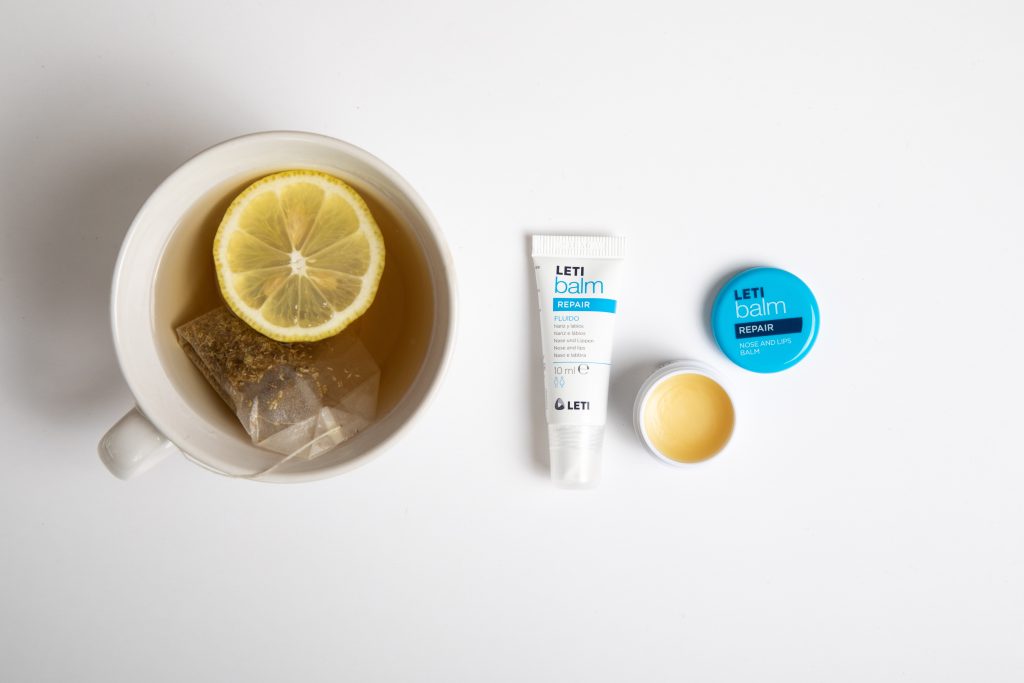
This is where a product like LETIbalm Repair Nose and Lip Balm plays a more targeted role. Its formulation is designed to support the skin under these conditions. Occlusive ingredients such as lanolin and mineral oil help reduce moisture loss by forming a protective layer, while emollients like cocoa seed butter and sunflower oil soften and condition the skin. Vitamin E supports recovery and centella asiatica helps calm visible irritation.
“I recommend using a product like LETIbalm Repair Nose and Lip Balm to restore the skin barrier and prevent irritation,” says Dr Knight. “Its gentle formulation makes it suitable for the whole family, which is particularly important during family-wide sick season exposure.
“For younger children, however, the LETIbalm Repair Paediatric Nose and Lip Balm is even better, offering a carefully formulated option designed to soothe and protect delicate skin during periods of frequent wiping and irritation.”
In reality, sick season skincare doesn’t require complexity, just consistency and the right kind of support for areas that are often overlooked.
As Dr Knight concludes: “The goal is to protect, soothe and restore the skin barrier so it can recover comfortably, even during periods of illness or irritation.”
LETIbalm products are available at Ivohealth, Dis-Chem and independent pharmacies.
Image credit: Tegan Smith


